
What Is a Licensed Bhutanese Tour Operator and How Do You Choose the Right One
Bhutan is one of the few countries in the world where you cannot simply book a flight, land, and figure it out as you go. Every international visitor, regardless of where they're from or how experienced a traveller they are, must enter the country through a licensed Bhutanese tour operator. It's not a suggestion. It's the law.
Most people find this out early in their research and accept it without fully understanding what it means. This article explains what a licensed operator actually is, what they're responsible for, what separates a good one from a forgettable one, and what honest questions to ask before you hand your trip over to anyone.
Why Bhutan Requires a Licensed Tour Operator
Bhutan's approach to tourism is unlike almost anywhere else. The country operates on a high value, low volume model. A deliberate policy to limit visitor numbers, protect the environment and culture, and ensure that tourism generates real economic benefit rather than cheap mass footfall.
Part of how that works in practice is the licensed operator requirement. To visit Bhutan as a tourist, your trip must be arranged through an operator that holds a valid licence issued by the Tourism Council of Bhutan. That operator is legally responsible for your visa application, your Sustainable Development Fee, your guide, your transport, and your accommodation for the full duration of your stay.
You cannot get a Bhutanese visa without an operator. You cannot travel independently once you're inside the country. The guide assigned to your trip is a licensed professional, not a freelancer someone found at the last minute. The system is designed to ensure every visitor has a structured, supported experience and that tourism revenue flows through accountable, registered businesses.
This is not bureaucracy for its own sake. It's a framework that has kept Bhutan's culture and environment largely intact while other small nations in the region have been overwhelmed by unmanaged tourism. Understanding that context matters when you're choosing who to book with.
What a Licensed Bhutanese Tour Operator Is Actually Responsible For
When you book through a licensed Bhutanese tour operator, they handle far more than logistics.
Your operator submits your visa application to the Tourism Council of Bhutan before you travel. You cannot apply independently. The approval is issued through them.
The SDF of USD $100 per person per day is collected and remitted through your operator. It is not a separate government payment you make on arrival.
Every group must have a licensed Bhutanese guide for the full duration of the trip. Your operator assigns and is responsible for that guide. The quality of your guide is one of the single biggest factors in how much you get out of your time in Bhutan.
All internal transport by private vehicle and your accommodation throughout the trip are coordinated by your operator. Certain sites, treks, and regions require additional permits and your operator handles all of that too.
If something goes wrong while you're in Bhutan, your operator is your point of contact and is legally obligated to support you. This matters more than most people think until they actually need it.
This is why the choice of operator matters more in Bhutan than in most destinations. In many countries, a bad tour company means a disappointing day trip. In Bhutan, your operator shapes the entire experience from the moment you land to the moment you leave. For the full picture of what a trip costs including the SDF and flights, see our complete Bhutan cost breakdown.
What Separates a Good Operator From a Forgettable One
There are hundreds of licensed operators in Bhutan. Some are large companies running dozens of groups at the same time, built around volume and margin. Some are small, founder-led operations that know specific valleys and communities in ways that no group tour can replicate. Licensed means legitimate. It doesn't mean the experience will be worth remembering.
Here's what actually separates operators worth booking with.
A good operator asks about you before they quote you. They want to know who you are, what you've travelled before, what matters to you, and what you're hoping to feel at the end of the trip. A forgettable operator sends you a standard itinerary and a price list within ten minutes of your first email.
Their guide relationships are genuine. The guide is not someone contracted last minute to fill a slot. A good operator has long-term relationships with specific guides whose values and knowledge match their own. Ask who your guide will be and what their background is before you book. If they can't tell you, that's an answer in itself.
They have real local connections. Bhutan's depth is in its communities, its monasteries, its farming families, its monks. An operator with genuine roots in the country can get you access to things that don't appear on any itinerary template. An operator running standardised group tours cannot.
They're honest about what they don't know. No operator knows everything. The best ones will tell you when something is outside their experience or when conditions might affect your plans, rather than promising you everything and adjusting quietly later.
They treat your trip as singular. Every itinerary should be designed from scratch around who you are and when you're going. If your itinerary looks like it was copy-pasted with your name swapped in, it probably was.
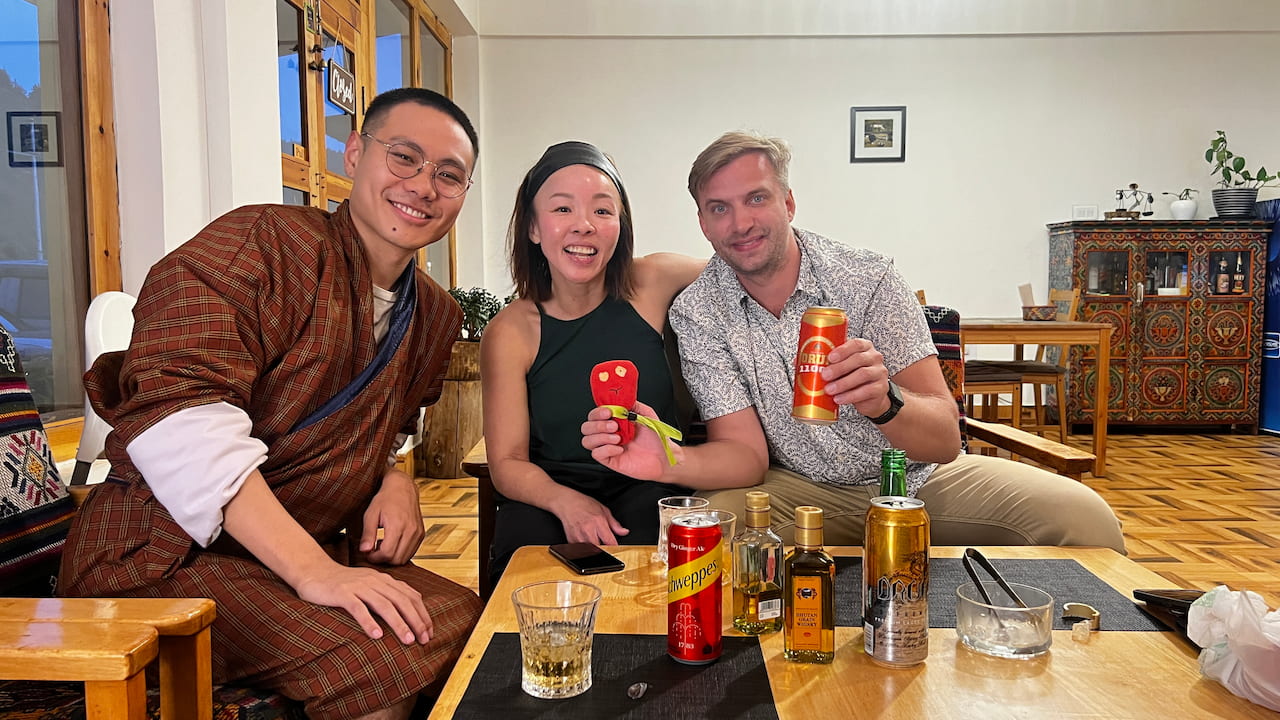
The difference between a good operator and a forgettable one shows up in moments like this, not in itinerary PDFs.
The Question Most People Forget to Ask
Most travellers researching Bhutan ask how much it costs and what they'll see. Very few ask who they're actually handing the trip to and what that person genuinely knows about the country.
That last question matters more than the other two combined.
Your guide will be with you every single day. Your operator's connections will determine what access you actually have. Their knowledge of the country will shape what you understand about everything you're seeing. A beautiful monastery is just a beautiful building without context. The right guide turns it into a conversation that changes how you see the world.
Ask your potential operator where they grew up. Ask them about their family's history in Bhutan. Ask them what they genuinely love about the country and what they think most visitors miss. The answer tells you more than any review or credential ever will.
The Story Behind Saidpiece Travels
Our family has been in Bhutan's tourism industry longer than Saidpiece Travels has existed as a business.
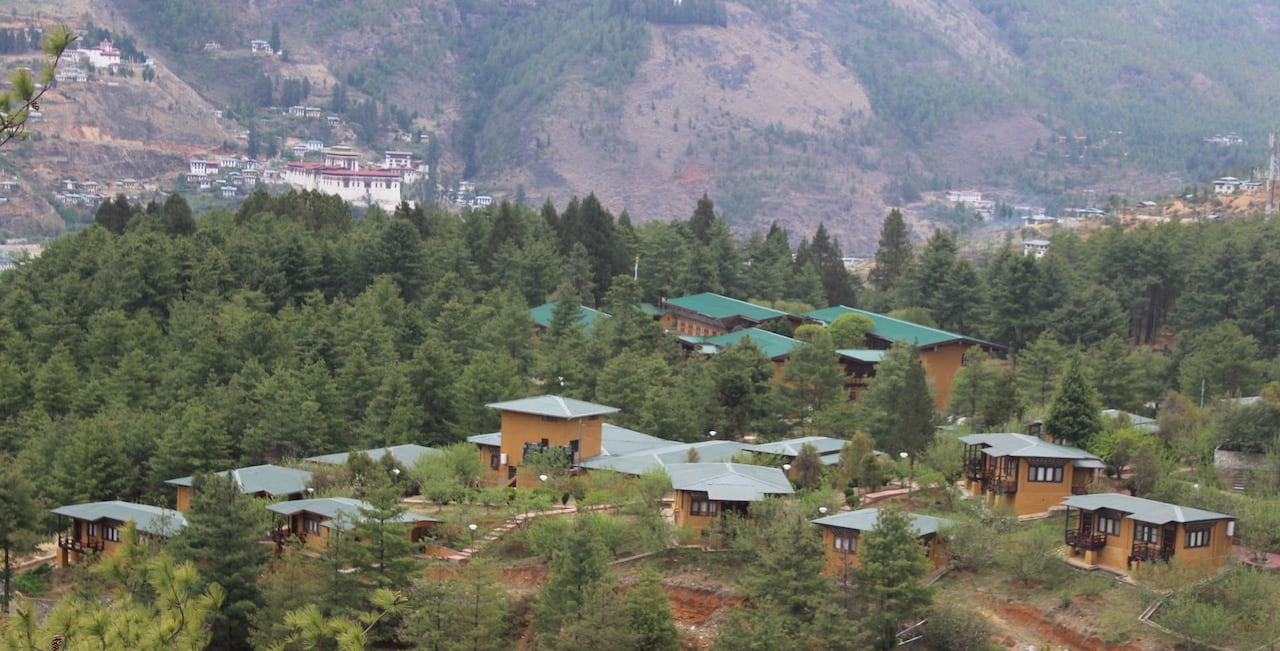
Our father started Pelri Cottages in Paro, one of the valley's oldest guesthouses. It didn't start as a calculated business move. His friends who ran travel agencies had nowhere to put their guests. The house had empty rooms. He started hosting. Then he built a few small cottages around the house. Then a few more. By the time we were growing up in Paro, what had started as a favour to friends had become a proper resort, built one guest at a time.
When he passed away, the property was sold in 2020. But what he left behind wasn't a building. It was a way of understanding what hospitality actually means. Not a transaction. Not a service. A relationship between someone who knows a place deeply and someone who has travelled far to understand it.
Saidpiece Travels was founded by Thinley Dhendup, who grew up in that house in Paro. After finishing his studies he built a career as an architect in Bangkok, spending seven years there before coming back to Bhutan to start his own architecture firm. He's good at it. The firm does well. But Bhutan's tourism industry was always in the background, the thing the family had known its whole life, and starting Saidpiece felt less like a new venture and more like returning to something unfinished.
The agency exists partly because coming back to this industry felt like coming home, and partly because of something we kept noticing about how other operators worked. Large groups, standardised itineraries, guests who left knowing they'd seen the landmarks but not the country.
We do it differently because we actually can. We grew up in Paro and Thimphu. We know how things work here at a level that goes beyond professional training. Our family has deep connections with the monastic community and with farming families living traditional lives in the valleys. We can introduce you to a monk who is a relative, to a farmer who will cook you lunch in a home that has looked the same for three generations, to corners of Bhutan that don't appear on any tour itinerary because no tour itinerary was ever designed by someone who grew up here.
This is not a volume business and it was never meant to be. We take on trips we genuinely want to design, for people we genuinely want to know. We want to understand your background, what you've been through in life, what you're looking for, and how we can make this trip something you carry with you long after you've come home.
That's not a sales line. That's the reason we do this.
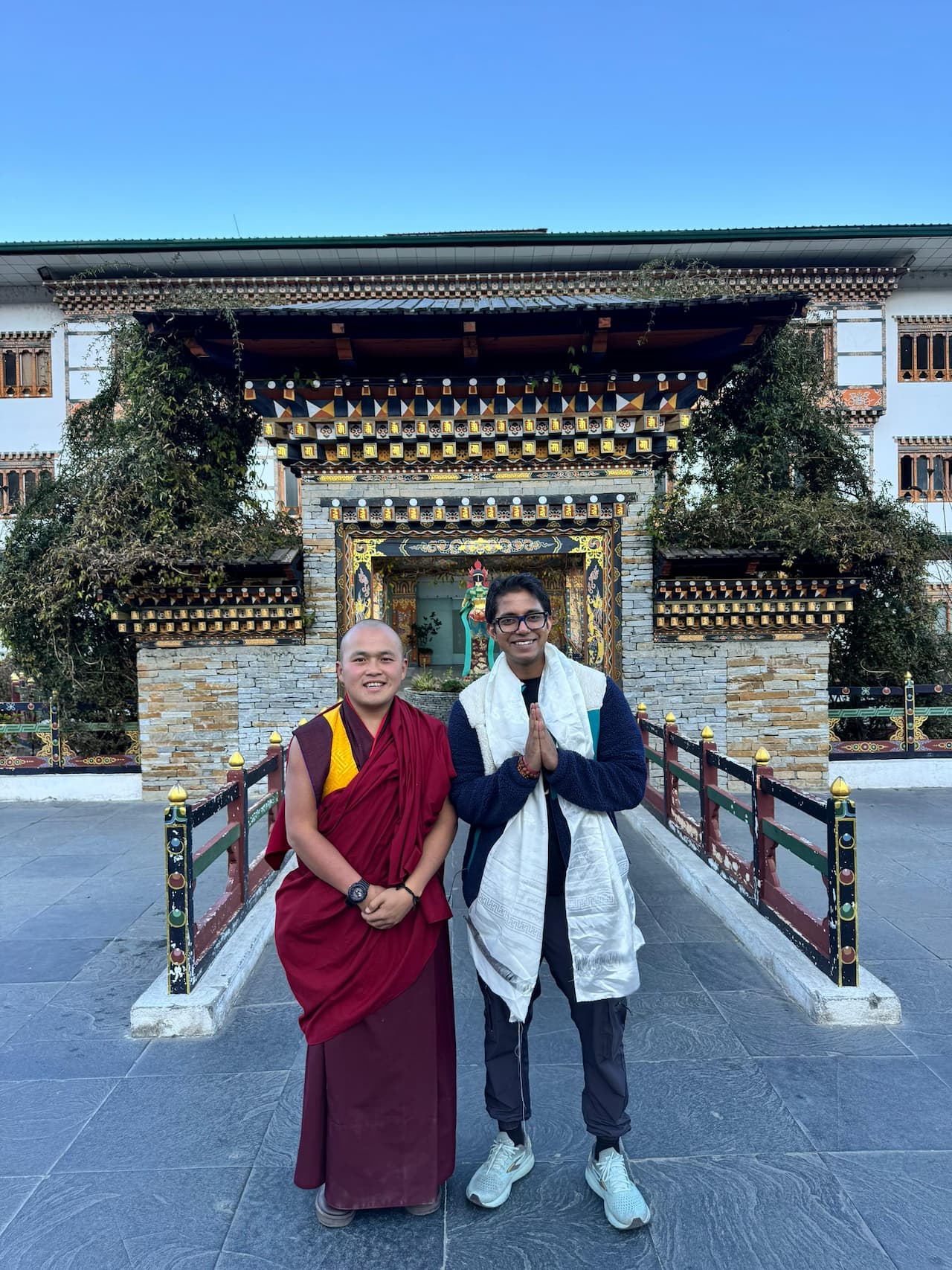
Real connections take years to build. This kind of access doesn't come from a booking platform.
Questions to Ask Any Licensed Bhutanese Tour Operator Before You Book
These are worth asking whether you're considering Saidpiece Travels or anyone else.
- Is the company licensed directly by the Tourism Council of Bhutan, or are they a reseller working through a licensed partner?
- Who specifically will be my guide and can I read about their background or speak with them before I commit?
- Is this itinerary actually built around me, or is it a template with my name added?
- What happens if I want to change the pace or adjust something mid-trip?
- What local connections do you have that aren't listed on the itinerary?
- How many other groups are you running at the same time as mine?
- If something goes wrong while I'm in Bhutan, who do I call and what can they realistically do?
The answers to those questions will tell you everything you need to know about whether an operator is the right fit for the kind of trip you want.
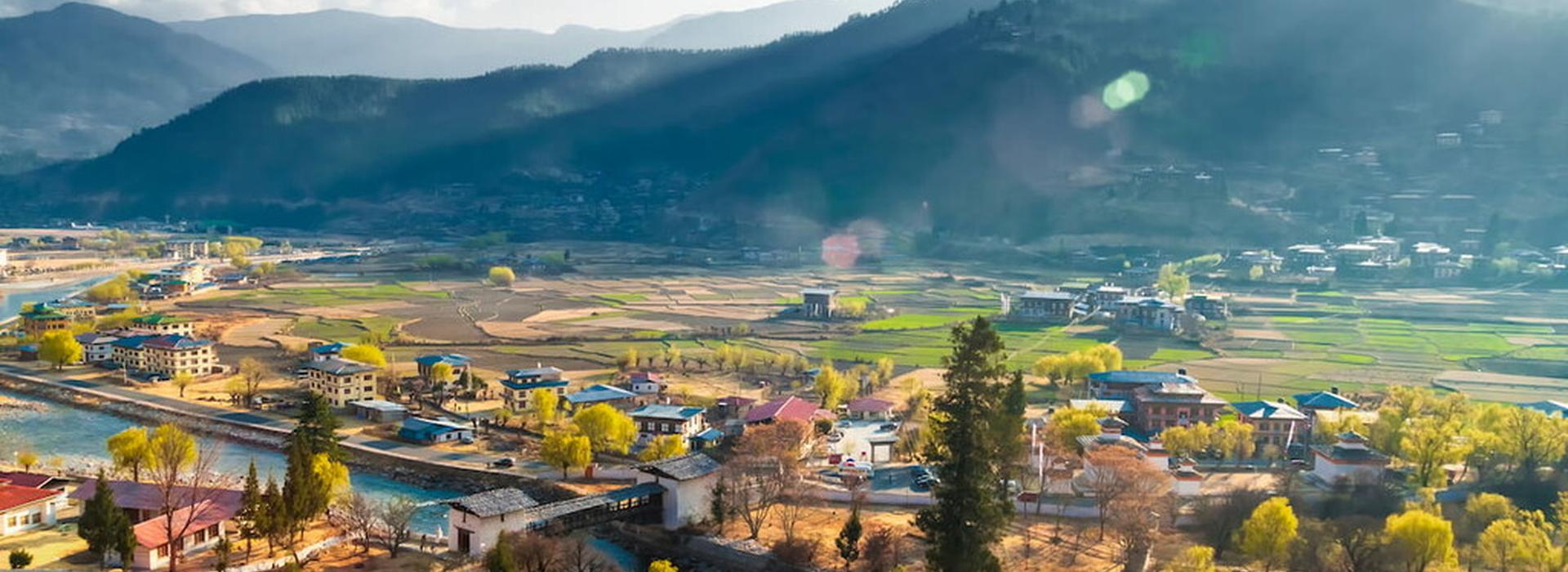
Paro Valley, where Saidpiece Travels began. Some places take a lifetime to understand properly.
Ready to Talk About Your Trip?
If you're seriously planning a visit to Bhutan and want to speak with someone who grew up there, we'd genuinely like to hear from you. Tell us who you are, when you're thinking of going, and what matters to you. We'll take it from there.
Get in Touch