
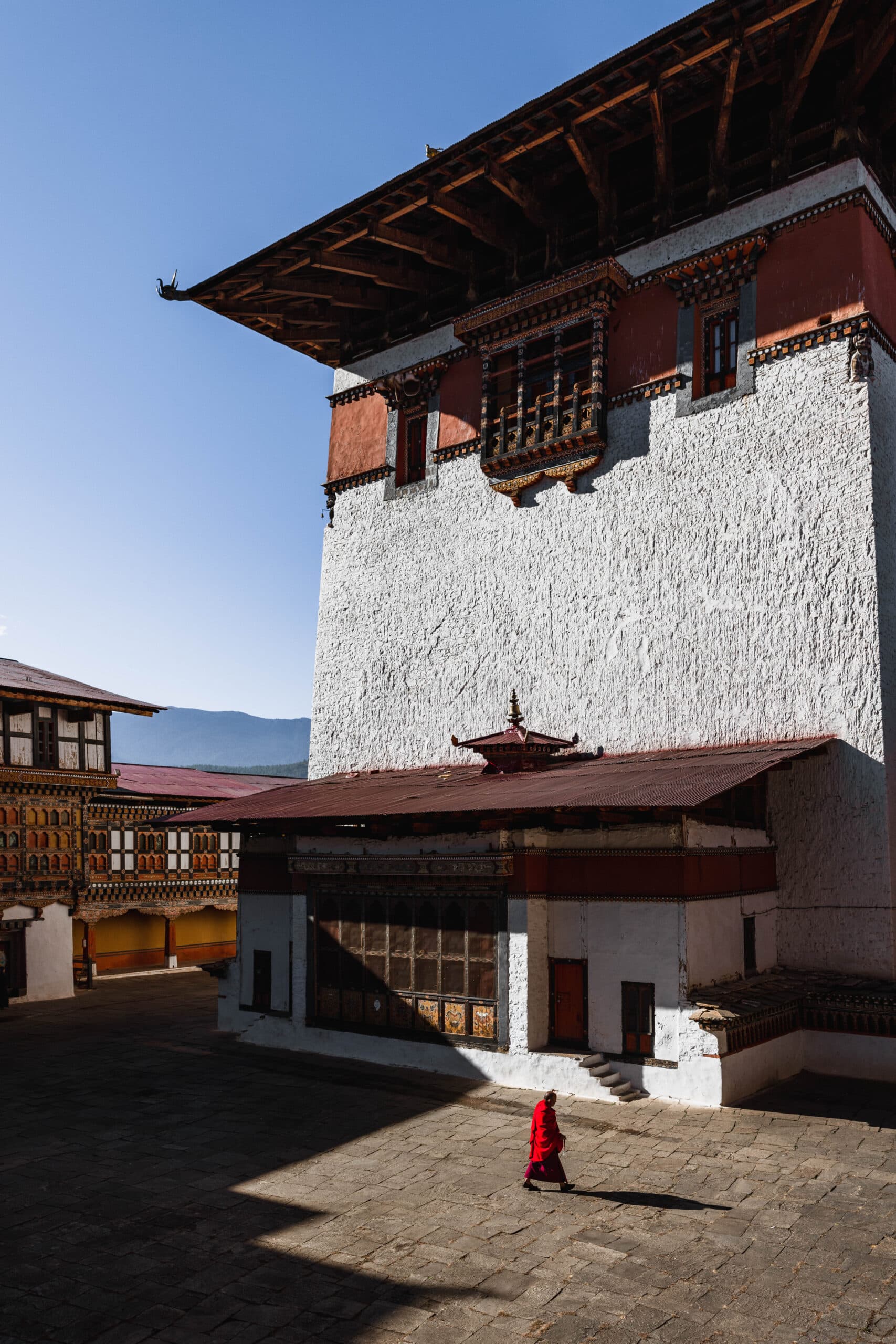
Bhutan after Paro Tsechu feels quieter, slower, and more intimate. Most people plan their trip around the festival itself — the masked dances, the sacred thangka unveiled before dawn, the throng of robes and incense smoke filling the dzong courtyard. And rightly so.
Tsechu festivals are among the most meaningful cultural events in Bhutan. They bring entire communities together, honour sacred traditions passed down for centuries, and offer visitors a rare chance to witness living culture — not performed for tourists, but alive for the people themselves.
But once the festival ends, something else begins.
The crowds thin. The sounds settle. The courtyards grow quiet again. What remains is not emptiness — it is something deeper: the everyday rhythm of Bhutanese life, unhurried and unscripted.
For us at Saidpiece Travels, this is where another kind of journey starts.
Why Bhutan after Paro Tsechu feels different
Paro Tsechu is a beautiful time to visit, but Bhutan is not only found in moments of celebration. It is also found in the quieter hours between them.
It is there in a monk crossing a courtyard in the early morning light. In the soft movement of prayer flags above a hillside. In the farmer returning to the fields after the festival week. In the silence of an old temple once the gathering has passed. In the way the valley breathes when there is nothing to announce and nowhere to rush.
After the festival, Paro feels more spacious. More intimate. More real. This is often the moment when travellers begin to notice what makes Bhutan stay with them long after they leave — not only the great cultural events, but the texture of ordinary life. The gentleness. The slowness. The sense that meaning is not always performed, but quietly lived.
When the moment of spectacle fades, a deeper kind of beauty begins to reveal itself — one found in silence, slowness, and the gentle rhythm of daily life.
What to do in Paro after the festival
The days following Paro Tsechu are among the best in the travel calendar for exploring the valley at your own pace. The main sites remain extraordinary — and with the festival crowd gone, they reveal themselves differently.
Hike to Tiger's Nest
After Tsechu, the trail is far quieter. You have the monastery and the views almost to yourself. Go before 8am for the best light and fewest people.
Rinpung Dzong without the crowds
During the festival this fortress-monastery is packed. Afterwards, walk its whitewashed corridors and painted halls with room to pause, look, and truly absorb where you are.
The National Museum of Bhutan
Housed in a former watchtower above Rinpung Dzong, the museum holds sacred art, textiles, and artefacts spanning centuries of Bhutanese history. Allow at least two hours.
Walk through Bondey village
A quiet agricultural village in the lower Paro valley. Farmhouses, apple orchards, and a daily life that continues regardless of the season or the festival calendar.
- Tiger's Nest takes 4–5 hours return from the base. Start before 8am if possible.
- Rinpung Dzong is typically open 9am–5pm. Remove shoes before entering the main temple.
- Bhutan requires all international travellers to book through a licensed tour operator. Independent travel is not permitted.
The quieter side of Paro
Paro is often introduced through its best-known landmarks and festival scenes, but there is another side to the valley that reveals itself more fully once the pace softens.
You begin to notice the architecture differently. The whitewashed walls, timber windows, courtyards, and layers of history feel less like attractions and more like part of a living landscape — buildings that people move through, maintain, and return to every day.
You notice the agricultural life of the valley. Fields, footpaths, and village edges become part of the story. You begin to see how closely daily life, spirituality, and the land are connected in a way that is still intact here.
You notice stillness. And in that stillness, Paro offers something many travellers are searching for without always knowing how to describe it: the feeling of being somewhere that has not been designed to constantly demand your attention. It invites it instead.
Beyond Paro: where to go after the festival
For travellers staying on after Paro Tsechu, the rest of Bhutan opens up naturally. Most itineraries move east toward Thimphu before continuing to Punakha — and this sequence works particularly well in the post-festival days.
Thimphu
Bhutan's capital is a 90-minute drive from Paro. It is the country's only city, though that word barely applies — Thimphu moves slowly and has no traffic lights. The weekend market along the Wang Chhu river, the Memorial Chorten, and Tashichho Dzong are all worth your time.
Punakha
An hour past Thimphu over the Dochula Pass, Punakha is warmer, lower, and lush. The Punakha Dzong — built at the confluence of two rivers — is widely considered the most beautiful in Bhutan. Farm walks, suspension bridges, and monastery hikes are the main pursuits here, and they are the right ones.
Gangtey (Phobjikha Valley)
If your itinerary allows for a longer stay, the Phobjikha Valley offers a completely different landscape — wide, open, and serene. The Gangtey Monastery sits above the valley with sweeping views. Remote, quiet, and remarkable.
For some travellers, the most memorable part of Bhutan is not the busiest day of the itinerary. It is the quietest one. That is often when the country becomes personal.
When to visit Bhutan after Paro Tsechu
Paro Tsechu typically falls in March or April, determined each year by the Bhutanese lunar calendar. The festival runs for five days, culminating in the unveiling of the Thongdrel — a giant sacred thangka — before dawn on the final morning.
The 3 to 7 days immediately following the festival are ideal. Spring weather in the Paro valley is mild and clear, rhododendrons are often still in bloom across the hillsides, and accommodation becomes easier to secure as festival visitors depart.
If you are drawn to culture, atmosphere, and a more grounded pace, travelling just around or after a major festival offers a beautiful balance — the cultural energy of the season, with more room to experience the country beyond the event itself.
Practical information for visiting Bhutan
- Visa: All international visitors (except Indian, Bangladeshi, and Maldivian nationals) require a Bhutan visa processed through a licensed tour operator before arrival.
- Sustainable Development Fee (SDF): USD 100 per person per night as of 2026, included in your tour package.
- Getting there: Flights arrive at Paro International Airport via Druk Air and Bhutan Airlines from Bangkok, Delhi, Singapore, Kathmandu, and Kolkata.
- Recommended stay: Book 7–10 days to cover the festival plus 3–4 days of quieter exploration.
- Currency: Bhutanese Ngultrum (BTN), pegged 1:1 to the Indian Rupee. USD and major cards accepted at hotels.
- Altitude: Paro sits at approximately 2,200m. Allow a day to acclimatise before strenuous hikes.
Questions about visiting Bhutan after Paro Tsechu
Is it worth visiting Bhutan after Paro Tsechu?
How long does Paro Tsechu last?
What is the best time to visit Bhutan after Paro Tsechu?
Is Bhutan expensive to visit?
Plan your Bhutan journey
Ready to experience Bhutan
beyond the highlight?
We design thoughtful, personalised itineraries that go beyond the major events and into the deeper rhythm of the country.
Plan My Trip