
Visiting Bhutan for the First Time: What to Expect
Nobody really knows what to expect from Bhutan until they land in Paro. If you are visiting Bhutan for the first time and trying to figure out what you are actually getting into, the permits, the cost, the logistics, what it feels like on the ground, this is the article to read first.
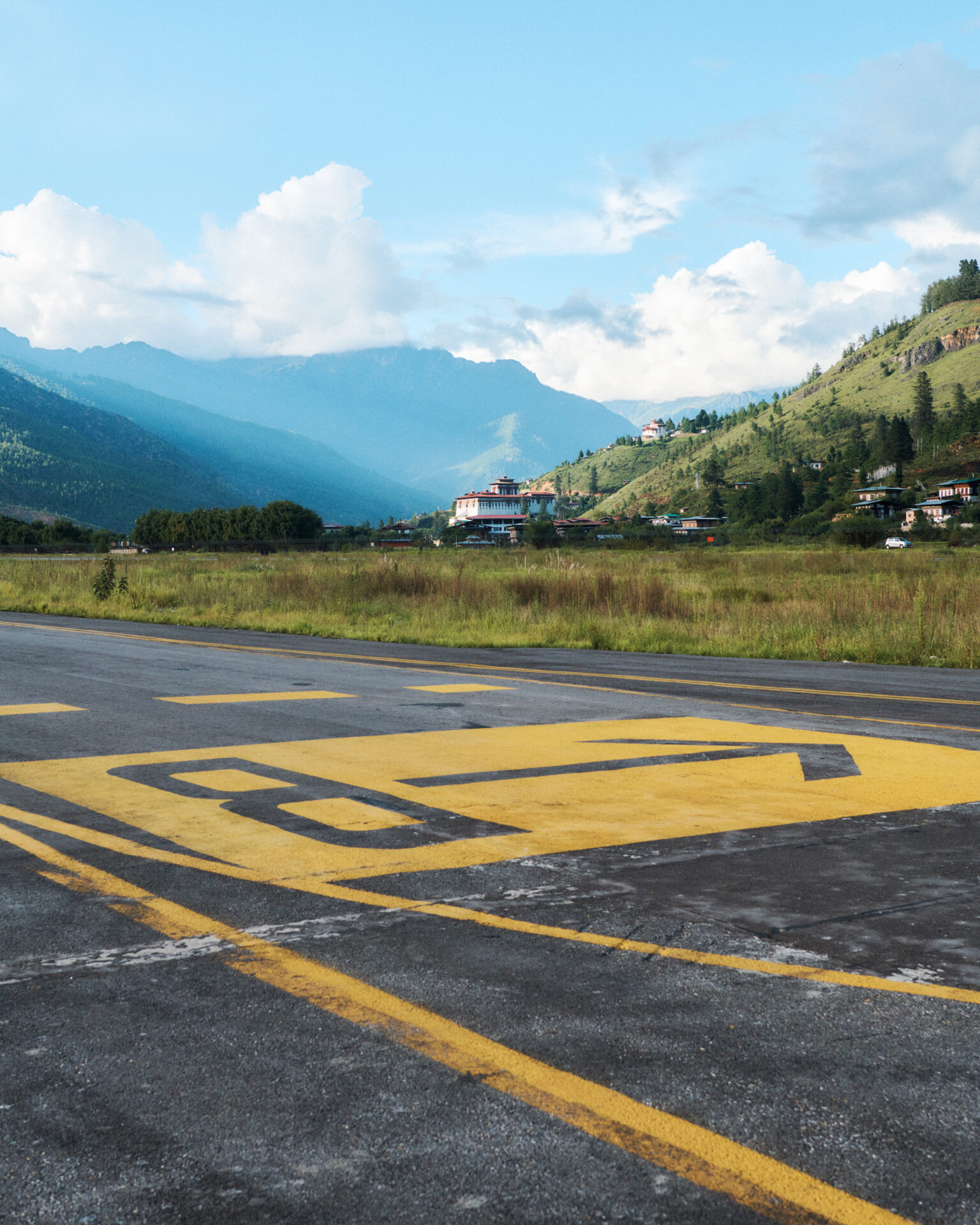
The approach into Paro International Airport is one of the most technically demanding in the world. The plane drops between steep mountain walls, banking sharply before the runway appears. Most people grip the armrest. It is a fitting introduction. Bhutan does not ease you in gently.
Per Night
Worth Going
Nationwide
How Bhutan Tourism Actually Works
This is the part most first-timers do not fully understand before they start planning, and it matters.
Bhutan requires every international visitor (except citizens of India, Bangladesh, and the Maldives) to book their trip through a licensed Bhutanese tour operator. You cannot visit independently. There is no booking a flight and figuring it out when you get there. The operator handles your visa clearance, which you need before you can even board a plane.
On top of that, all international tourists pay a Sustainable Development Fee (SDF) of USD $100 per person per night. This is a government levy, not part of your tour cost. It goes toward free healthcare and education for Bhutanese citizens, and underpins the country's environmental and cultural policies. We have a full breakdown of how it works in our Bhutan SDF guide.
What this means practically: a 7-night trip costs $700 per person in SDF before you have paid for flights, accommodation, a guide, a driver, or meals. Bhutan is not cheap. That is the reality of how the country manages tourism, and the main reason it still feels so different from everywhere else in the region.
What the Permit Process Actually Looks Like
For international tourists, the process is simpler than it sounds. Almost everything runs through your operator. Here is who does what.
- Choose a licensed Bhutanese tour operator
- Tell them what you want from the trip
- Show your visa clearance letter at immigration on arrival
- Pay the SDF and the USD $40 visa fee
- Visa clearance through the Tourism Council of Bhutan
- Route permits for areas beyond Paro and Thimphu
- Your guide, driver, and private vehicle
- Accommodation and most of your meals
If you want to travel beyond Paro and Thimphu, which you do, because Punakha, Phobjikha Valley, and Bumthang are where Bhutan gets genuinely interesting, you will need a route permit. Your operator arranges it as part of the trip. It sounds bureaucratic. In practice, it is straightforward once you have a good operator handling it.
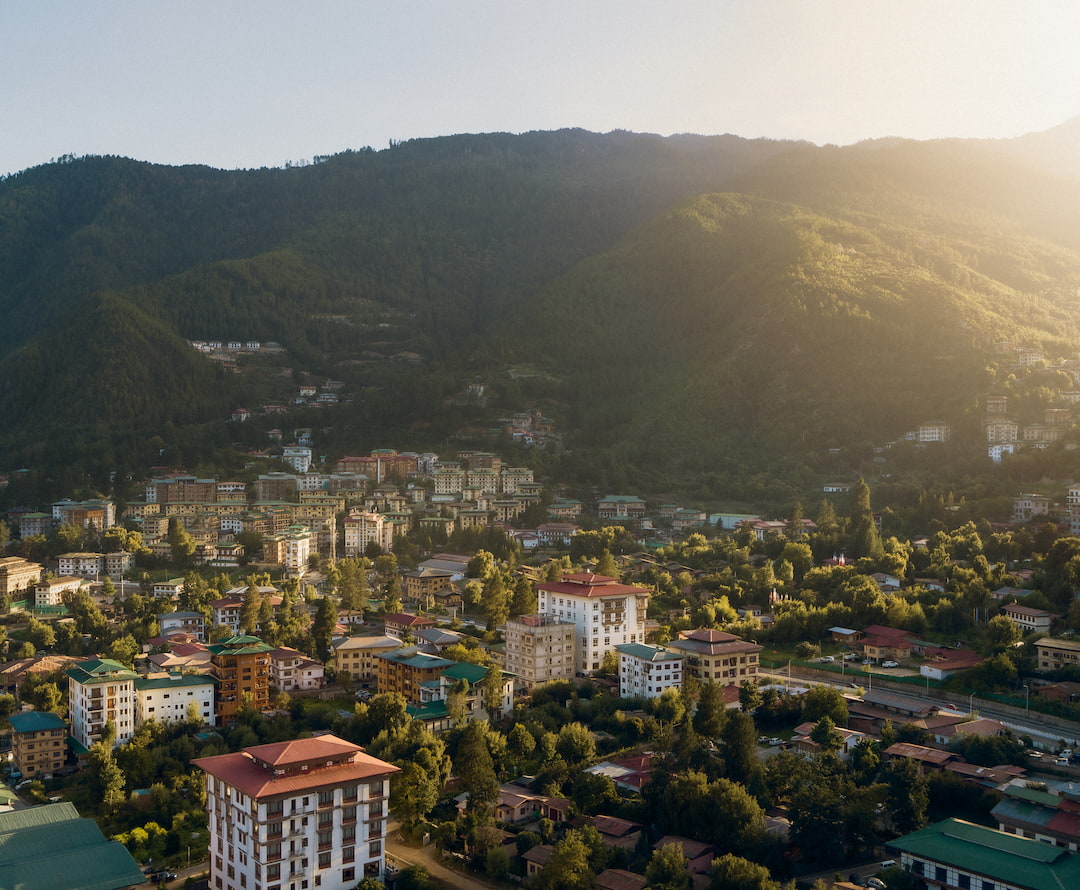
Bhutan from above. The scale, the forest cover, and the architecture all look like this.
What Your First Days Actually Feel Like
Most trips start in Paro, spend a night or two there, then move to Thimphu before heading deeper into the country.
Paro is small. The town itself takes about 20 minutes to walk end to end. The valley is long and flat, surrounded by forested ridges, with the Paro Chhu river running through the middle. There are no billboards. The architecture follows strict national guidelines, so every building, from a petrol station to a hotel, looks Bhutanese. It takes a day or so to recalibrate to the pace.
Thimphu is the capital, which surprises some people. It has coffee shops, a shopping district, and a construction boom that has been running for years. It is also famously the only national capital in the world without a single traffic light. Where you would expect one, a policeman directs traffic by hand from a small pavilion. First-timers often underestimate how much there is here, the Memorial Chorten, the National Library, the Tashichho Dzong.
The thing most people are not prepared for is the quiet. Not silence, there are cars, prayer flags snapping in the wind, dogs, the sound of construction. But there is an absence of the noise most cities export. No advertising. No hustle. No one trying to sell you anything on the street. It takes a day to stop waiting for it and start noticing what is actually there instead.
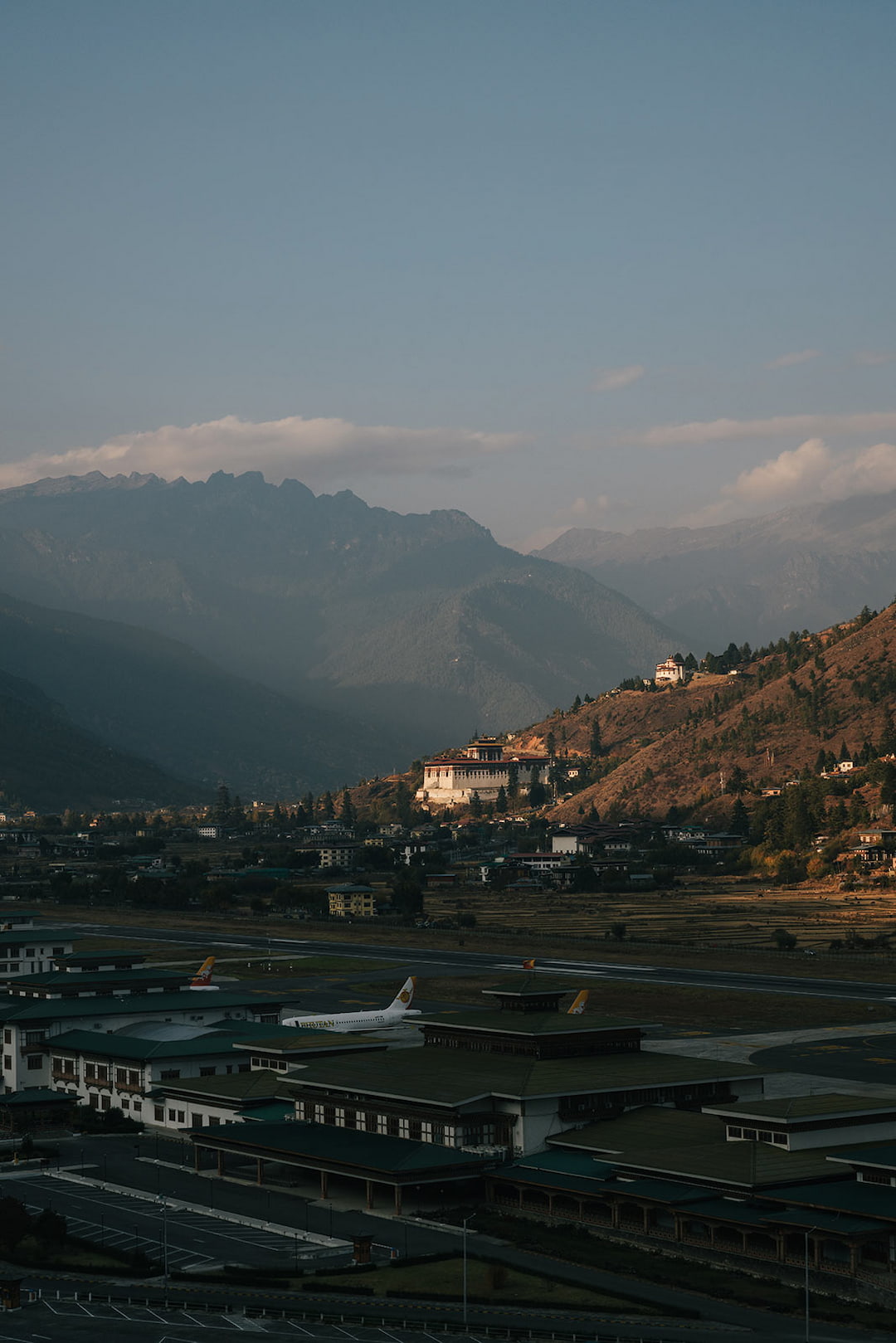
Paro from above. The first valley most first-timers see.
The Honest Truth About Cost
A first trip to Bhutan is going to cost more than you think, especially if Southeast Asia travel has calibrated your expectations. Here is a realistic range for international visitors on a 7-day private trip.
| Cost Item | Estimate (per person) |
|---|---|
| Sustainable Development Fee (7 nights) | USD $700 |
| Visa fee | USD $40 |
| Tour cost (guide, driver, accommodation, most meals) | USD $1,000 to $2,500+ |
| International flights to Paro | USD $600 to $1,500+ |
| Realistic total | USD $2,500 to $5,000+ |
Most people who come to Bhutan have already decided it matters. You can see it the moment they arrive.
For a full cost breakdown, read How Much Does a Bhutan Trip Cost?
How Long You Actually Need
Seven days is the minimum that makes the trip worthwhile. Ten days is better.
With seven days, you can cover Paro, Thimphu, and Punakha comfortably. Add Phobjikha Valley and you are pushing it, but it is doable. With ten days, you get proper time in each place, time to walk slowly, sit somewhere for an hour, not feel like you are rushing from one dzong to the next.
Bhutan rewards slow travel more than almost anywhere. The roads are winding and often unpaved. Distances that look short on a map take two hours to drive. Build in driving time and do not try to cover too much.
One thing worth knowing is altitude. Bhutan sits at around 2,300 metres in Thimphu and higher in the eastern valleys. Most people feel fine, but some get a slight headache, fatigue, or disrupted sleep in the first day or two. Take it easy on arrival day, drink plenty of water, and do not schedule your hardest hike for day one.
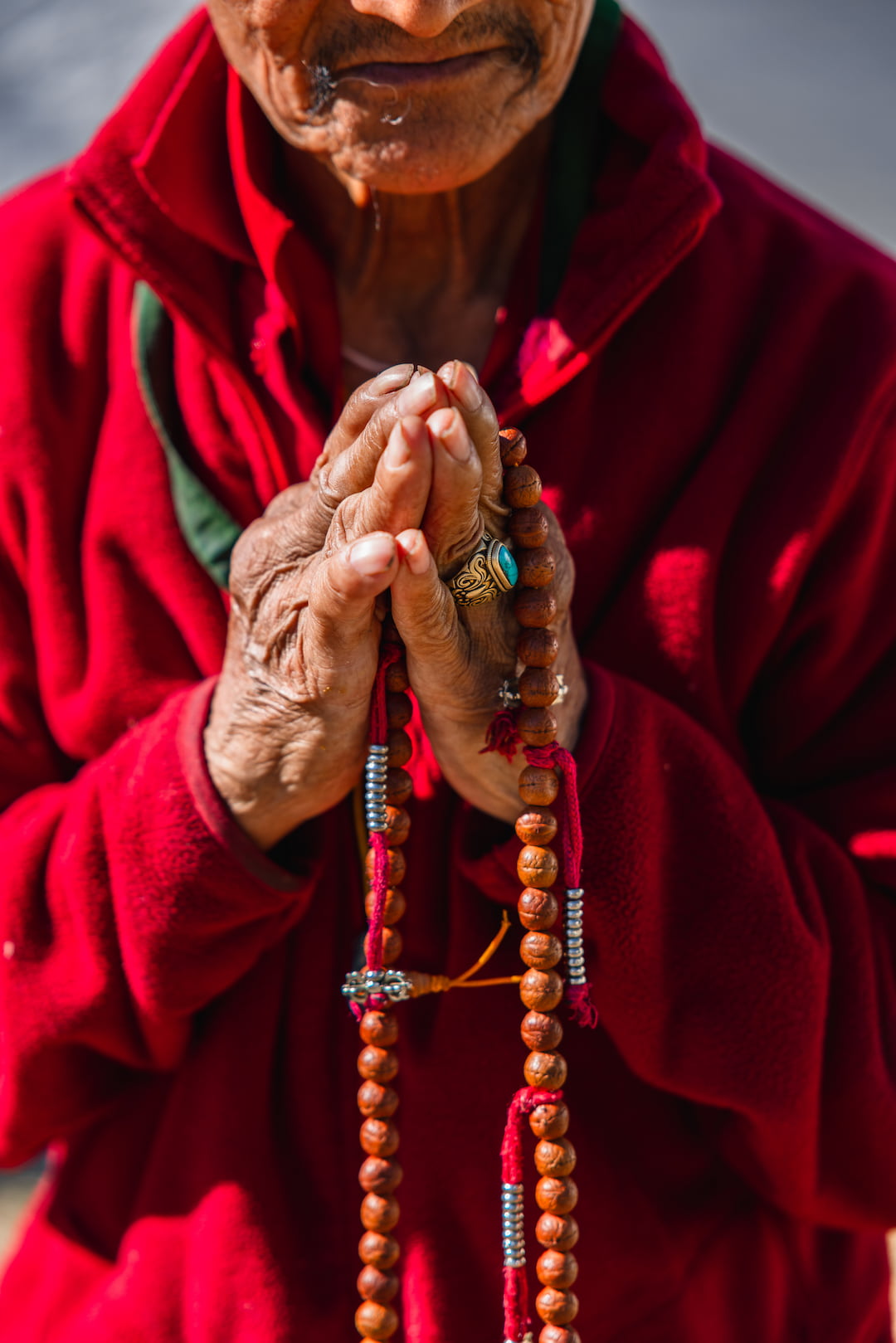
The part that stays with people longest is not always the monasteries.
What Bhutan Actually Is (and Isn't)
A few things first-timers often get wrong.
It is not frozen in time
Bhutan has smartphones, streaming services, a growing cafe culture, and teenagers who dress like teenagers everywhere else. The modernisation is real, and it happened fast. What makes Bhutan different is not that it is untouched, it is that it made deliberate choices about what to let in and what to protect.
It is not all monasteries
The culture and Buddhism are central to everything, but Bhutan is also forests, rivers, farmland, open valleys, and mountains. Some of the best parts of a trip have nothing to do with a religious site.
Gross National Happiness is not a slogan
It is the actual framework the government uses to measure policy outcomes alongside economic indicators. It covers psychological wellbeing, cultural resilience, environmental sustainability, and good governance. Whether or not you agree with every policy decision, the idea that a country should measure what it is actually trying to achieve, not just GDP, is worth thinking about when you are there.
The people are genuinely warm
Not in the trained hospitality way. In the way where your guide's family invites you to eat with them and means it. Where monks ask you questions because they are curious, not because they want a photo. That part is harder to explain until you have been there.
A Few Practical Things Worth Knowing
Currency. The Bhutanese ngultrum (BTN) is pegged to the Indian rupee. Indian rupees are accepted everywhere. USD is less practical day to day, so exchange at the airport or a bank in Thimphu on arrival.
Cash. Carry more than you think you will need, especially outside Paro and Thimphu. ATMs exist but are unreliable in smaller towns.
Internet. Mobile data works in most towns. Some rural areas and valleys have limited or no coverage.
Tipping. Not mandatory but genuinely appreciated. A reasonable daily tip for your guide is around USD $10 to $15, and similar for your driver.
Dress. There is no strict dress code for tourists in most areas, but covering shoulders and knees when entering dzongs and temples is required. Worth doing without being asked.
Photography. Ask before photographing people, especially monks and during religious ceremonies. Inside temples, rules vary, so check with your guide first.
Where to Start with Planning
The simplest version: find a Bhutanese tour operator you trust, tell them what you want from the trip, and let them build the itinerary. The best operators are the ones who ask questions about you before they start talking about logistics.
The questions worth answering for yourself before you reach out:
- How many days do you have?
- What matters most, culture, landscapes, trekking, or a mix?
- What is your accommodation preference, comfortable hotels, boutique properties, or something more immersive?
- Is there a festival you want to time the trip around?
If you would like help thinking through any of this, get in touch with us at Saidpiece Travels. No commitment, we are happy to talk through what the right trip looks like for you before you decide anything.