
Best Time to Visit Bhutan: A Month-by-Month Guide
Most travel guides will tell you the best time to visit Bhutan is spring or autumn. That's broadly true, but it tells you almost nothing useful when you're actually trying to plan a trip.
The real answer depends on what you're going for. Festivals, mountain views, trekking, quiet valleys, wildlife, or a trip that doesn't break the budget. Each has a different ideal window. This guide covers every season honestly so you can decide which best time to visit Bhutan lines up with what you actually want from the trip.
The Short Answer
Spring (March to May) and autumn (September to November) are the headline seasons for a reason. The weather is at its most stable, major festivals cluster around both windows, and the skies are clear enough to see the Himalayan peaks that define Bhutan's landscape.
But every season has its own character. Winter has a quiet and a clarity that peak season never delivers. Monsoon turns the valleys a green so saturated it looks almost unreal. The wrong season for one traveller is the right season for another.
Read through each section and find the one that fits.
Spring in Bhutan: March, April, and May
Spring is the season most people picture when they think of Bhutan. There's a reason for that.
What to Expect
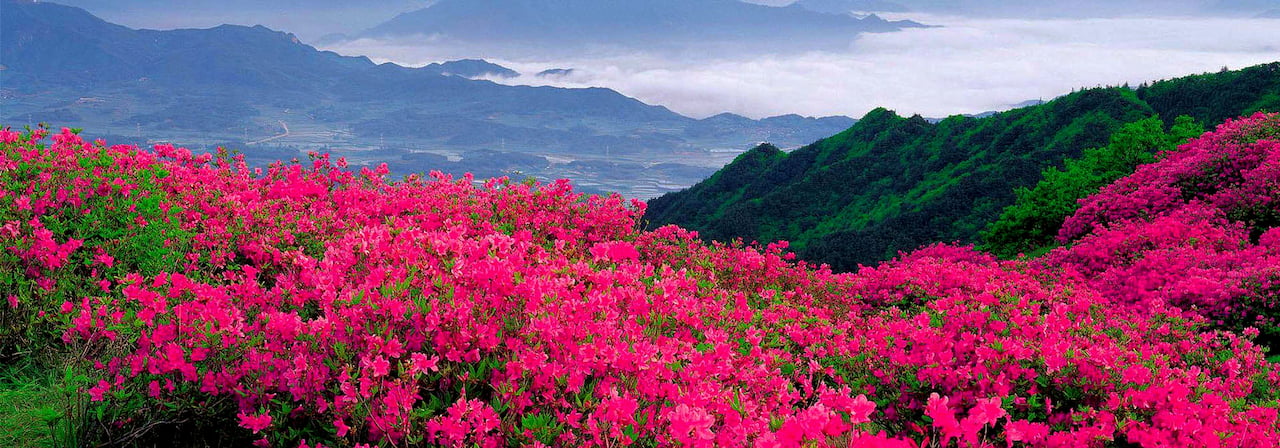
From late February through May, rhododendrons cover the hillsides across the country. Bhutan has over 46 species, and the colour moves up the mountain slopes as the season progresses: lower valleys in late February, mid-altitude forests by April, alpine zones by May.
In the western valleys where most tours are based, the seasonal character breaks down like this:
Paro sits at around 2,200 metres. In March, daytime temperatures run between 8°C and 15°C. Nights are cold, dropping to 2°C or below. The air is dry and clear, rhododendrons are beginning to bloom on the lower slopes, and the valley floor is still recovering its green from the dry winter months. By April, daytime temperatures reach 14°C to 20°C, the forests above the valley are in full bloom, and conditions are comfortable for walking and sightseeing throughout the day.
Thimphu sits slightly higher at around 2,300 metres and runs a degree or two cooler than Paro across all seasons. March mornings are crisp, often requiring a jacket until mid-morning. April is pleasant without being hot. May can bring warmer afternoons, up to 22°C on clear days, and the occasional early shower as the pre-monsoon period begins.
Punakha is the warmest of the three main valleys, sitting at around 1,200 metres. Spring temperatures here range from 18°C to 28°C in April and May. The valley is lush by March, the jacaranda trees from the winter bloom have faded, and the surrounding hillsides are green and flowering. May in Punakha is warm and humid, with increasing cloud by afternoon. Most visitors prefer to include Punakha early in their itinerary during spring, spending the warmer days further up in Paro or Thimphu.
May overall is the shoulder end of spring. Accommodation is easier to find, prices soften slightly, and the trails in the higher elevation areas remain in good condition. It's a reasonable time to visit if flexibility matters to you.
Festivals in Spring
Paro Tshechu is the standout event of the spring calendar.
The festival runs for five days at Rinpung Dzong, the large fortress-monastery that sits above the Paro valley. The first day takes place inside the dzong itself, in the main assembly hall. Days two through five move to the large open-air courtyard adjacent to the dzong, where the mask dances are performed in full view of the surrounding hills and valley below.
What you'll witness: elaborately costumed monks performing Cham dances. These are masked performances depicting the triumph of good over evil and retelling episodes from the life of Guru Rinpoche, who brought Buddhism to Bhutan in the 8th century. On the final morning, a giant thangka, a sacred religious painting, is unfurled at dawn before sunrise. Bhutanese people travel from across the region to witness this, believing that seeing it brings spiritual blessing. The combination of the crowd, the dawn light, and the scale of the occasion is something that stays with you.
The Rhododendron Festival in April is held at Lamperi Botanical Garden, about 35 kilometres from Thimphu on the road to Punakha, near Dochula Pass. It's a two-day event focused on Bhutan's extraordinary rhododendron diversity. Of the 46 species recorded in the country, 29 grow within the park itself. The programme includes guided garden walks, cultural performances, local food stalls, and craft displays. It's a lighter, more relaxed event than a Tshechu, but the setting at altitude with the Himalayan backdrop is genuinely worthwhile if it falls during your trip. For 2026, the festival ran on April 13 and 14. Dates shift slightly each year.
Note on festival dates: Bhutanese festivals follow the lunar calendar and the date shifts each year against the Gregorian calendar. Paro Tshechu typically falls in March or April. Always verify the exact dates for your specific travel year with the Tourism Council of Bhutan or your operator before booking flights.
Book accommodation for Paro Tshechu well in advance. Hotels in Paro and Thimphu fill up four to six months ahead for this festival.
Who Spring Is Best For
Spring suits you if you are a first-time visitor who wants the full Bhutan experience — festivals, blooms, and clear weather — in a single trip. It's also the best window for photographers, given the combination of rhododendrons, clear skies, and festival colour. You need to plan well in advance and accept that the main sites won't be quiet. Paro during Tshechu week is busy. That's the trade-off for coming at the best possible time.
Autumn in Bhutan: September, October, and November
For many travellers who have visited Bhutan more than once, autumn is their preferred season. The reason comes down to air quality.
After the monsoon clears in late September, the atmosphere is washed clean. The Himalayan peaks become visible with a sharpness that spring, for all its charm, can't match. If seeing Bhutan's mountain backdrop matters to you — Jomolhari, Jichu Drake, and the range visible from Dochula Pass — this is the season to come.
What to Expect
September in the western valleys is transitional. Occasional afternoon rain continues through mid-month, but by late September the skies begin to clear. Temperatures in Paro and Thimphu sit between 14°C and 22°C. The landscape is richly green from months of rain and the air starts to feel noticeably fresher.
October is peak season, and conditions in all three western valleys are excellent.
Paro in October sits between 10°C and 20°C during the day, dropping to 5°C at night. The skies are reliably clear in the mornings, haze is rare, and the surrounding hillsides carry the last green of the monsoon before the dry winter begins. This is the best month for photography around Paro, particularly on the trails above the valley.
Thimphu in October is comfortable throughout the day, 10°C to 18°C, with cool evenings. The city is at its liveliest during Thimphu Tshechu, when locals dress in their finest and the atmosphere in the capital shifts noticeably.
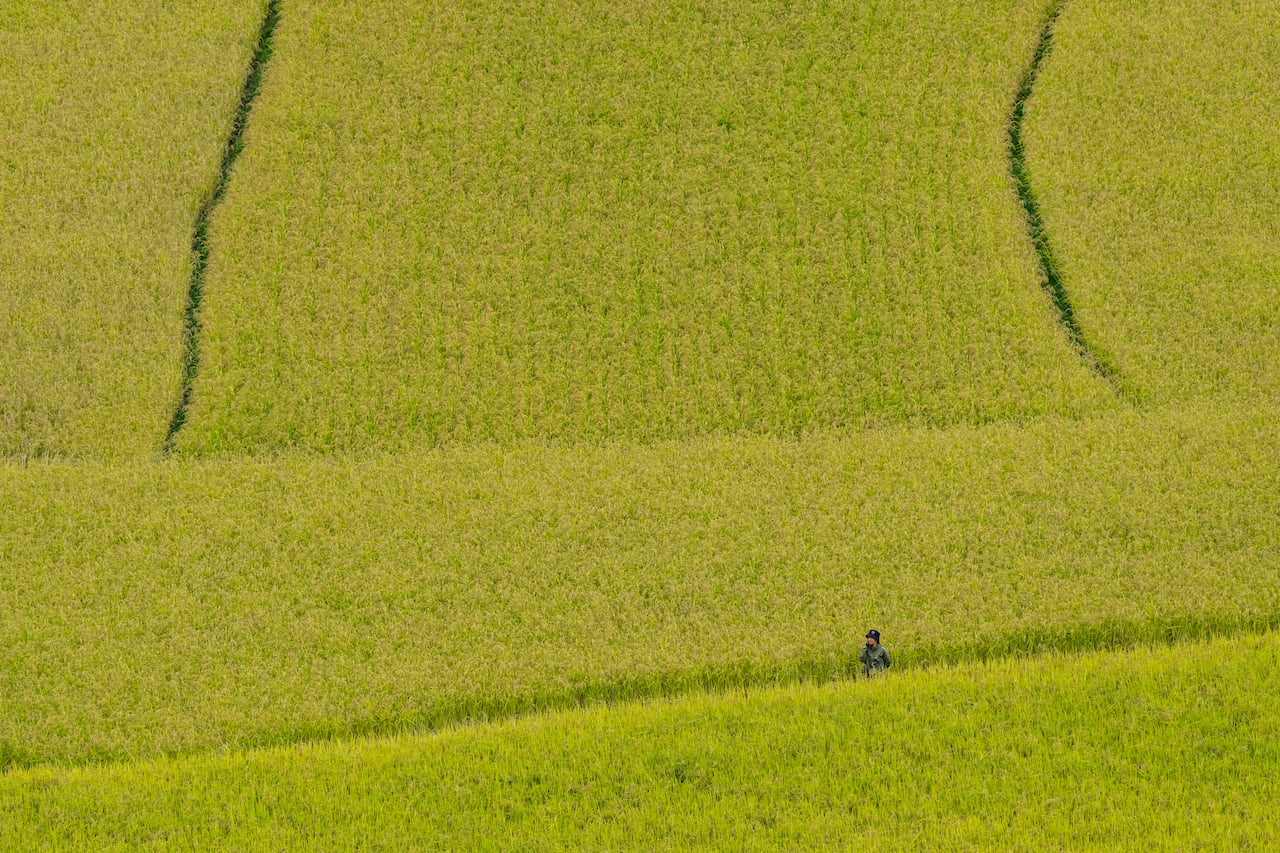
Punakha in October is outstanding. The rice paddies are approaching harvest, and the valley floor turns from green to gold across a two-to-three week window. The Punakha Dzong at the confluence of the Mo Chhu and Pho Chhu rivers has a particular quality in October light that is genuinely hard to describe to someone who hasn't seen it. Temperatures are warm by Bhutanese standards, 18°C to 26°C in the valley, making Punakha the warmest point on a western circuit in this season.
November sees temperatures dropping. Paro evenings fall to 0°C to 2°C. Thimphu follows closely. Punakha stays warmer at night, around 8°C to 12°C. Tourist numbers fall off significantly after the Thimphu Tshechu period, prices soften, and the mountain views remain excellent through the month. November regularly delivers a better experience than October for less effort and lower cost.
Festivals in Autumn
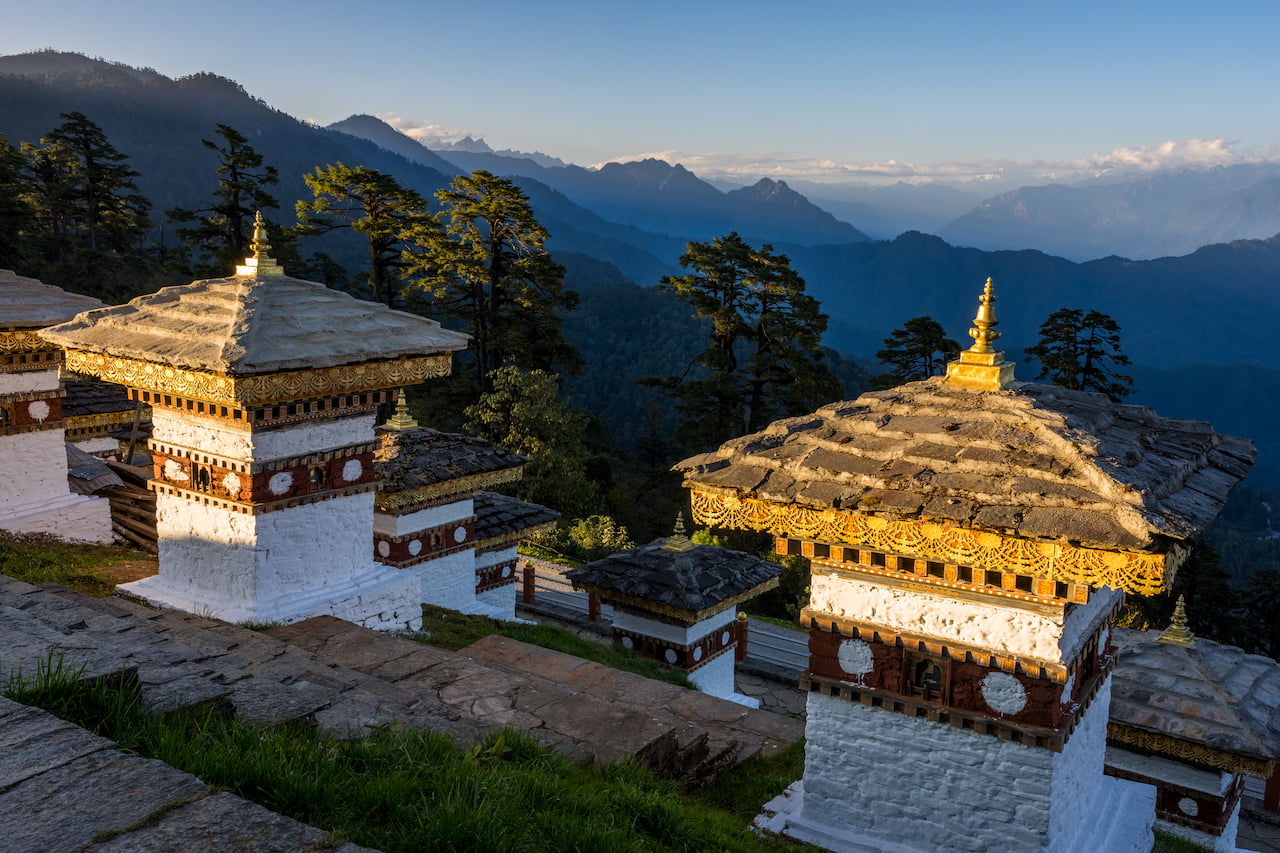
Thimphu Tshechu is the largest and most logistically accessible festival in Bhutan. Held at Tashichho Dzong in the capital, it runs for three days in late September and draws the largest crowds of any festival in the country. The structure follows the same pattern as Paro Tshechu: Cham mask dances, elaborate costumes, a thangka unfurling. The setting in the capital makes it easier to combine with broader sightseeing. For first-time visitors who can't make it to Paro in spring, Thimphu Tshechu is the natural alternative.
Gangtey Tshechu in the Phobjikha Valley runs for three days in late September. The valley is Bhutan's famous wintering ground for black-necked cranes, though the cranes arrive in November rather than September. The tshechu here is smaller and more local in character than the headline festivals, which is precisely what makes it worth attending for travellers who want to experience festival culture without the larger crowds.
Jambay Lhakhang Drup in Bumthang, typically in late October, is one of the more unusual festivals in the Bhutanese calendar. It features a fire blessing ceremony performed at night and requires travelling east of Thimphu, roughly six to seven hours by road. Travellers who make the effort consistently describe it as among the most memorable experiences of their trip.
Black-necked Crane Festival in Phobjikha Valley in mid-November marks the arrival of the migratory cranes from Tibet. It's a smaller outdoor event with local dances and cultural performances. The cranes themselves are present in the surrounding fields. For anyone with an interest in wildlife alongside culture, this is a genuine highlight.
All Bhutanese festival dates follow the lunar calendar. The approximate timing above is for general guidance. Confirm exact dates for your travel year with the Tourism Council of Bhutan or your operator.
Who Autumn Is Best For
Autumn is the right choice if mountain photography is a priority. It also suits travellers who want to combine a major festival with solid hiking conditions across the western circuit. November specifically suits anyone who wants a high-quality Bhutan experience at lower cost and with less competition for accommodation and guides.
Winter in Bhutan: December, January, and February
Most people skip winter. That is the best argument for it.
What to Expect
Winter in the western valleys is cold. In Paro and Thimphu, temperatures drop to 0°C and below at night from December through February, with occasional frost on the valley floor. Daytime in Paro and Thimphu is manageable, typically 8°C to 14°C on clear days, but the cold is real and clothing layers are not optional.
Punakha is the exception. Sitting at 1,200 metres, the valley stays noticeably warmer through winter. Daytime temperatures in Punakha in December and January run between 16°C and 22°C. Nights are cool but not harsh, around 6°C to 10°C. For travellers who find the cold in Paro or Thimphu limiting, Punakha in winter is a genuinely comfortable base.
February is when the jacaranda trees along the Punakha valley come into bloom. The combination of the flowering trees, the river, the dzong, and the winter light creates a version of Punakha that is different from any other season.
Festivals in Winter
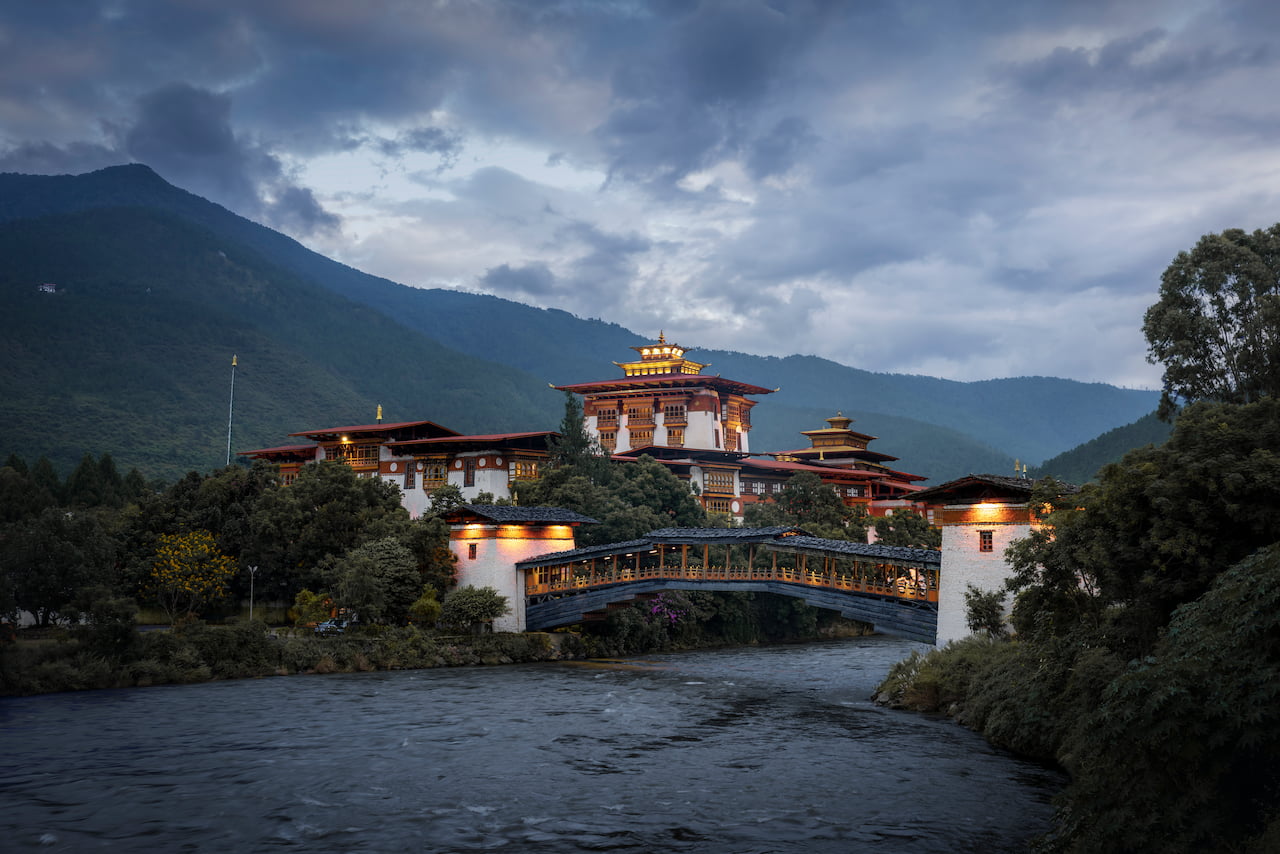
Punakha Drubchen and Punakha Tshechu both take place in February at Punakha Dzong. The Drubchen runs for three days and is unlike most Bhutanese festivals. Rather than mask dances, it features a dramatic historical reenactment: Bhutanese soldiers in armour and traditional weapons recreate the repelling of a Tibetan invasion from the 17th century. The performance takes place in the courtyard of the dzong, with the river visible below. It is a genuine religious and historical commemoration that visitors are permitted to witness, not a staged show for tourists. The Tshechu follows with the more recognisable mask dance format. Taken together over five or six days in February, this is one of the most complete cultural experiences available in Bhutan.
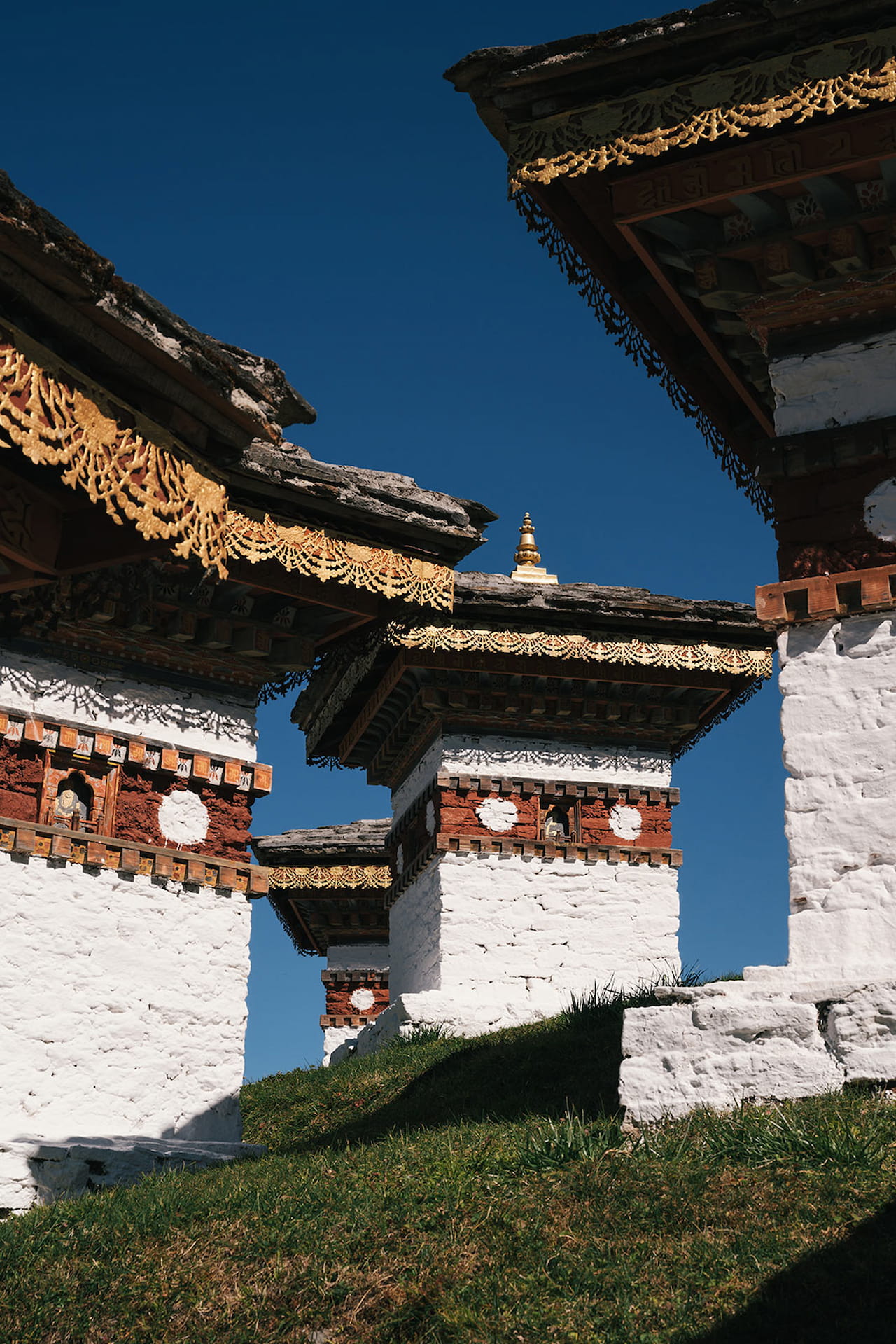
Druk Wangyel Festival at Dochula Pass falls on December 13 each year. This is one of the few Bhutanese festivals with a fixed Gregorian date, which makes planning considerably easier. The setting at 3,050 metres, surrounded by 108 memorial chortens with Himalayan peaks behind on a clear day, is extraordinary. Members of the royal family typically attend, which gives the occasion a different atmosphere to a standard Tshechu.
Who Winter Is Best For
Winter works well for travellers who are comfortable with cold and want Bhutan without the crowds. Anyone whose trip centres on Punakha specifically will find February particularly rewarding. Repeat visitors who have done spring and autumn often find winter delivers the most personal and unencumbered version of the country. Rates are lower, operators are more available, and the experience at major sites feels genuinely unhurried.
Monsoon Season in Bhutan: June, July, and August
Monsoon means rain, often heavy and persistent. Cloud cover is frequent. Mountain views disappear for days at a time. On forested trails, leeches are a genuine consideration.
Those are real trade-offs. Here is what you get in exchange.
What to Expect
June marks the start of the monsoon across the western valleys. Mornings often start clear before cloud and rain build through the afternoon. The valleys are already deeply green, and rice planting is underway. The agricultural landscape in June — farmers working the lower terraces of Punakha and Paro — is a version of Bhutan that peak season visitors rarely see.
July and August are the wettest months. Persistent cloud makes mountain views unlikely. The main towns, dzongs, and cultural sites remain fully accessible. Visitor numbers are at their lowest point of the year. What you lose in weather, you gain in having Bhutan largely to yourself.
In the western circuit specifically, Punakha is drier during early monsoon than Paro and Thimphu because of its lower elevation and the way the valley sits in relation to the weather systems. Travellers who focus on Punakha in June or early July generally find conditions more workable than those heading straight to Paro or the higher passes.
Festivals in Monsoon
Nimalung Tshechu and Kurjey Festival in Bumthang fall in late June, at the start of the monsoon period. Bumthang sits in central Bhutan and tends to be drier in early monsoon than the western valleys. These are among the smaller, more intimate festivals on the annual calendar, attended primarily by local Bhutanese. For travellers willing to make the journey east, the combination of a quieter festival experience and Bumthang's cultural richness makes late June a reasonable option.
The July and August window has fewer major festivals and the weather is at its most committed. This period suits travellers who want the agricultural landscape and the solitude rather than specific cultural events.
Who Monsoon Is Best For
Monsoon has a genuine case for budget-conscious travellers, as rates across accommodation and operators are at their lowest. It also suits anyone drawn specifically to Bhutan's farmed landscape and the working valley atmosphere of planting season. Travellers who have been before and want to see a different Bhutan — quieter, greener, and more local — often find the early monsoon window more interesting than a repeat peak season visit.
Bhutan Festival Calendar at a Glance
All dates below follow the Bhutanese lunar calendar and shift each year. The months given are approximate windows based on recent years. Verify exact dates for your travel year with the Tourism Council of Bhutan or your operator before making bookings.
| Festival | Location | Typical Season | What Makes It Worth Attending |
|---|---|---|---|
| Punakha Drubchen | Punakha Dzong | February | Historical reenactment unlike any other festival in Bhutan |
| Punakha Tshechu | Punakha Dzong | February | Mask dances at Bhutan's most beautiful dzong |
| Paro Tshechu | Rinpung Dzong, Paro | March to April | Bhutan's most famous festival; five days including the dawn thangka unfurling |
| Rhododendron Festival | Lamperi Botanical Garden, Dochula | April | Nature and culture combined; 29 of Bhutan's 46 rhododendron species in one park |
| Nimalung and Kurjey Festivals | Bumthang | Late June | Intimate festivals in Bhutan's spiritual heartland |
| Thimphu Tshechu | Tashichho Dzong, Thimphu | Late September | Bhutan's largest festival; easiest logistics for western circuit visitors |
| Gangtey Tshechu | Gangtey Monastery, Phobjikha | Late September | Smaller and more local in character; the crane valley in late season |
| Jakar Tshechu | Jakar Dzong, Bumthang | October | Festival in the heart of Bhutan's most culturally rich region |
| Jambay Lhakhang Drup | Jambay Lhakhang, Bumthang | Late October | Night fire blessing ceremony; one of the more distinctive events in Bhutan |
| Black-necked Crane Festival | Phobjikha Valley | Mid-November | Wildlife and culture; the cranes arrive from Tibet in this window |
| Druk Wangyel Festival | Dochula Pass | December 13 (fixed) | Royal family attendance; fixed date makes planning straightforward |
What Is the Best Time to Visit Bhutan for You?
Here is the honest framework.
Whatever month you choose, two things hold true across all of them: book your accommodation before your flights, and confirm your permits early through your operator. Bhutan requires more advance planning than most destinations. The travellers who get the most from it are always the ones who came prepared.
Ready to Plan Your Bhutan Trip?
Choosing the right time to visit is just the start. Permits, the Sustainable Development Fee, licensed operator requirements, festival booking lead times, accommodation across the western circuit. There is more to coordinate than most destinations, and getting it right makes a real difference to the experience you have on the ground. If you want help putting a trip together that is timed properly and built around what matters to you, get in touch with us at Saidpiece Travels.
Get in TouchFor official festival dates and travel information, visit the Tourism Council of Bhutan .